
Ethnic Rhinoplasty in Turkey
Ethnic Rhinoplasty in Turkey
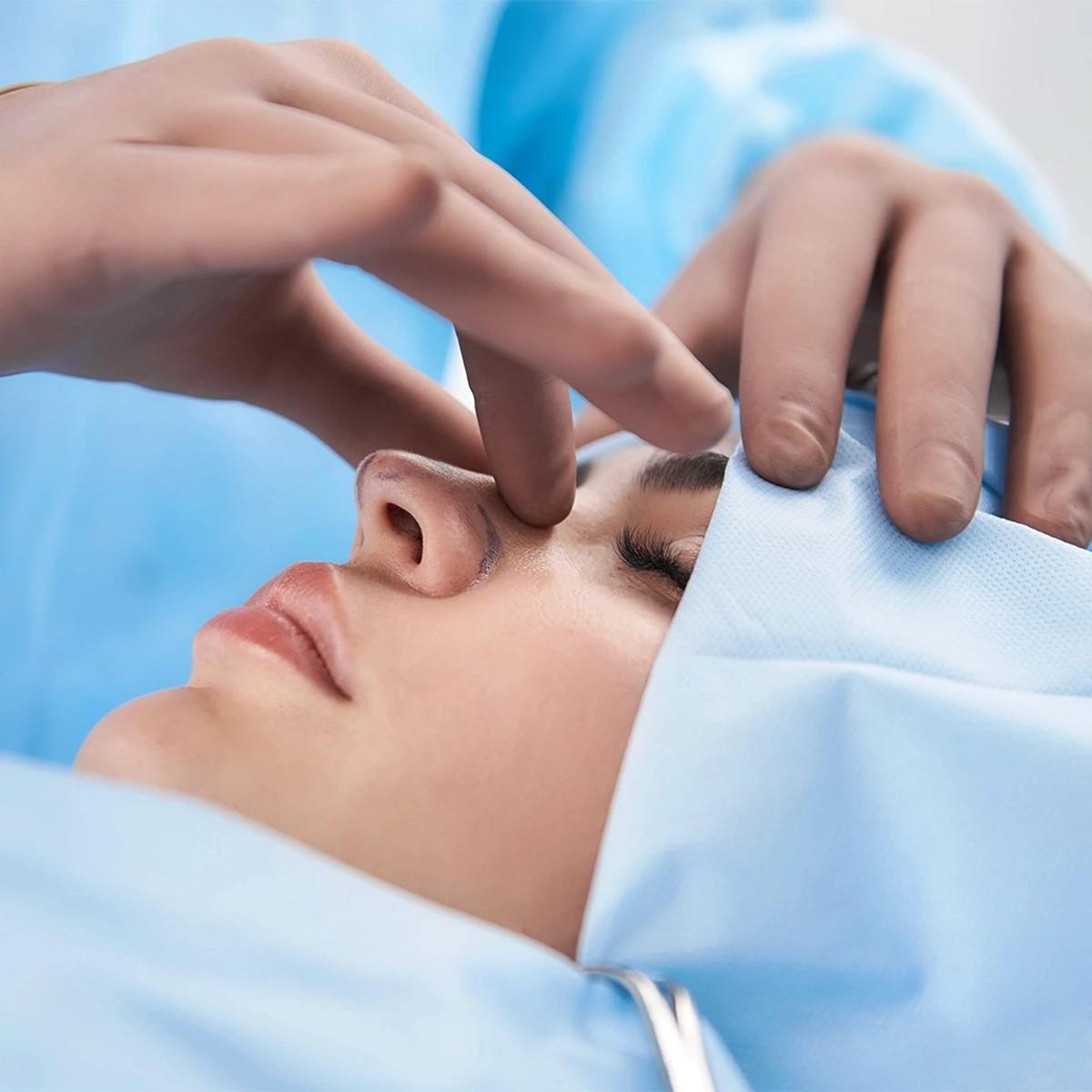
In nasal surgery, types of noses are divided into different groups: African, Asian, Caucasian, and Oriental. Noses that do not fall into the 'Caucasian' category are referred to as ethnic nose types. Ethnic rhinoplasty focuses on the correction of all non-Caucasian noses. Specifically, the Asian nose has anatomical features that must be taken into account during nasal surgery.
A rhinoplasty requires a very individualized approach depending on ethnicity. Our partner clinic in Turkey has a team of surgeons who have developed a special sensitivity to the different aesthetic preferences of people with African American, Middle Eastern, Asian, and other non-Caucasian backgrounds.
Ethnic Rhinoplasty in Turkey
Ethnic Rhinoplasty in Turkey
In nasal surgery, types of noses are divided into different groups: African, Asian, Caucasian, and Oriental. Noses that do not fall into the 'Caucasian' category are referred to as ethnic nose types. Ethnic rhinoplasty focuses on the correction of all non-Caucasian noses. Specifically, the Asian nose has anatomical features that must be taken into account during nasal surgery.
A rhinoplasty requires a very individualized approach depending on ethnicity. Our partner clinic in Turkey has a team of surgeons who have developed a special sensitivity to the different aesthetic preferences of people with African American, Middle Eastern, Asian, and other non-Caucasian backgrounds.
Ethnic Rhinoplasty in Turkey
Ethnic Rhinoplasty in Turkey
In nasal surgery, types of noses are divided into different groups: African, Asian, Caucasian, and Oriental. Noses that do not fall into the 'Caucasian' category are referred to as ethnic nose types. Ethnic rhinoplasty focuses on the correction of all non-Caucasian noses. Specifically, the Asian nose has anatomical features that must be taken into account during nasal surgery.
A rhinoplasty requires a very individualized approach depending on ethnicity. Our partner clinic in Turkey has a team of surgeons who have developed a special sensitivity to the different aesthetic preferences of people with African American, Middle Eastern, Asian, and other non-Caucasian backgrounds.
Challenges of Ethnic Rhinoplasty
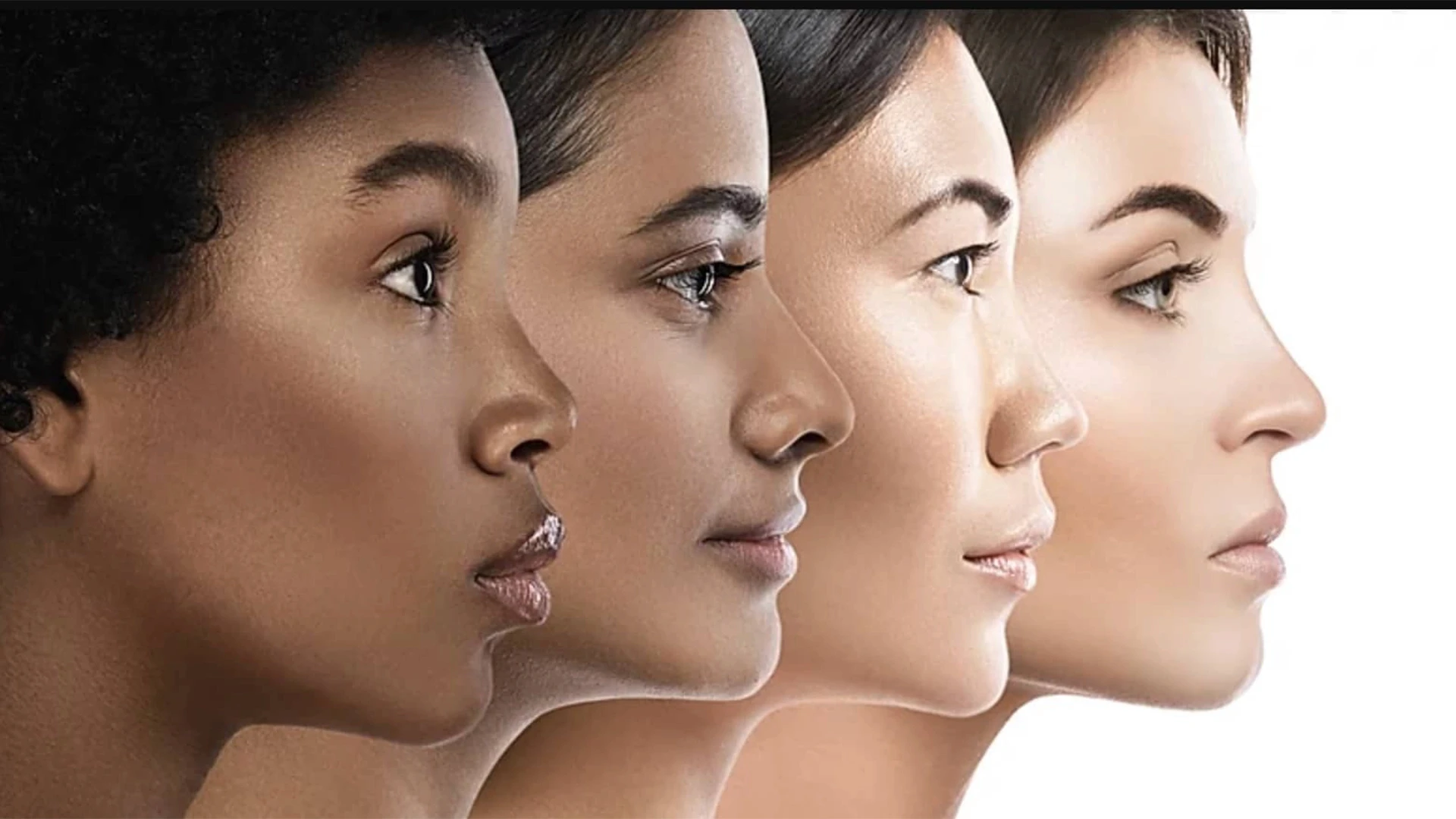
Analogous to other forms of rhinoplasty, the ethnic variant is also achieved by removing or reshaping cartilage and bone beneath the skin. While cartilage and bone reductions were necessary for Anglo-Saxon noses over the past 20 years, today's challenges are focused more than ever on cartilage construction and thus on "open" surgery.
Rather weak cartilage is particularly common in people of African or Asian descent. In the past, these noses were considered inoperable. However, with the development of sophisticated reconstruction and correction techniques, this is possible today.
Known techniques of ethnic rhinoplasty include the building up of the nasal bridge, an elongation of the nasal tip, and the narrowing of the nostril entrances. Taking into account the patient's ethnic heritage, our partner surgeons have specialized in optimizing the appearance of African-American, Middle Eastern, or Asian noses. In doing so, the spectrum of patient requirements ranges from subtle to spectacular and is intensively discussed with the surgeons prior to the procedure.
Challenges of Ethnic Rhinoplasty
Analogous to other forms of rhinoplasty, the ethnic variant is also achieved by removing or reshaping cartilage and bone beneath the skin. While cartilage and bone reductions were necessary for Anglo-Saxon noses over the past 20 years, today's challenges are focused more than ever on cartilage construction and thus on "open" surgery.
Rather weak cartilage is particularly common in people of African or Asian descent. In the past, these noses were considered inoperable. However, with the development of sophisticated reconstruction and correction techniques, this is possible today.
Known techniques of ethnic rhinoplasty include the building up of the nasal bridge, an elongation of the nasal tip, and the narrowing of the nostril entrances. Taking into account the patient's ethnic heritage, our partner surgeons have specialized in optimizing the appearance of African-American, Middle Eastern, or Asian noses. In doing so, the spectrum of patient requirements ranges from subtle to spectacular and is intensively discussed with the surgeons prior to the procedure.
Challenges of Ethnic Rhinoplasty
Analogous to other forms of rhinoplasty, the ethnic variant is also achieved by removing or reshaping cartilage and bone beneath the skin. While cartilage and bone reductions were necessary for Anglo-Saxon noses over the past 20 years, today's challenges are focused more than ever on cartilage construction and thus on "open" surgery.
Rather weak cartilage is particularly common in people of African or Asian descent. In the past, these noses were considered inoperable. However, with the development of sophisticated reconstruction and correction techniques, this is possible today.
Known techniques of ethnic rhinoplasty include the building up of the nasal bridge, an elongation of the nasal tip, and the narrowing of the nostril entrances. Taking into account the patient's ethnic heritage, our partner surgeons have specialized in optimizing the appearance of African-American, Middle Eastern, or Asian noses. In doing so, the spectrum of patient requirements ranges from subtle to spectacular and is intensively discussed with the surgeons prior to the procedure.
Challenges of Ethnic Rhinoplasty
Turkey is located at the center of Asian, African, Arabian, and European ethnicities and offers well-functioning, large airports near the city for international patients. In this regard, the use of complete surgical techniques for these nasal shapes is part of the standard procedures in Turkey.
A rhinoplasty requires a highly individual approach depending on ethnicity. Our partner clinic in Turkey has a staff of surgeons who have developed a special sensitivity for the different aesthetic preferences of people with African American, Middle Eastern, Asian, and other non-Caucasian backgrounds. Our partner surgeons specialize in achieving results in nose job surgery that correspond optimally with the facial features of individual patients.
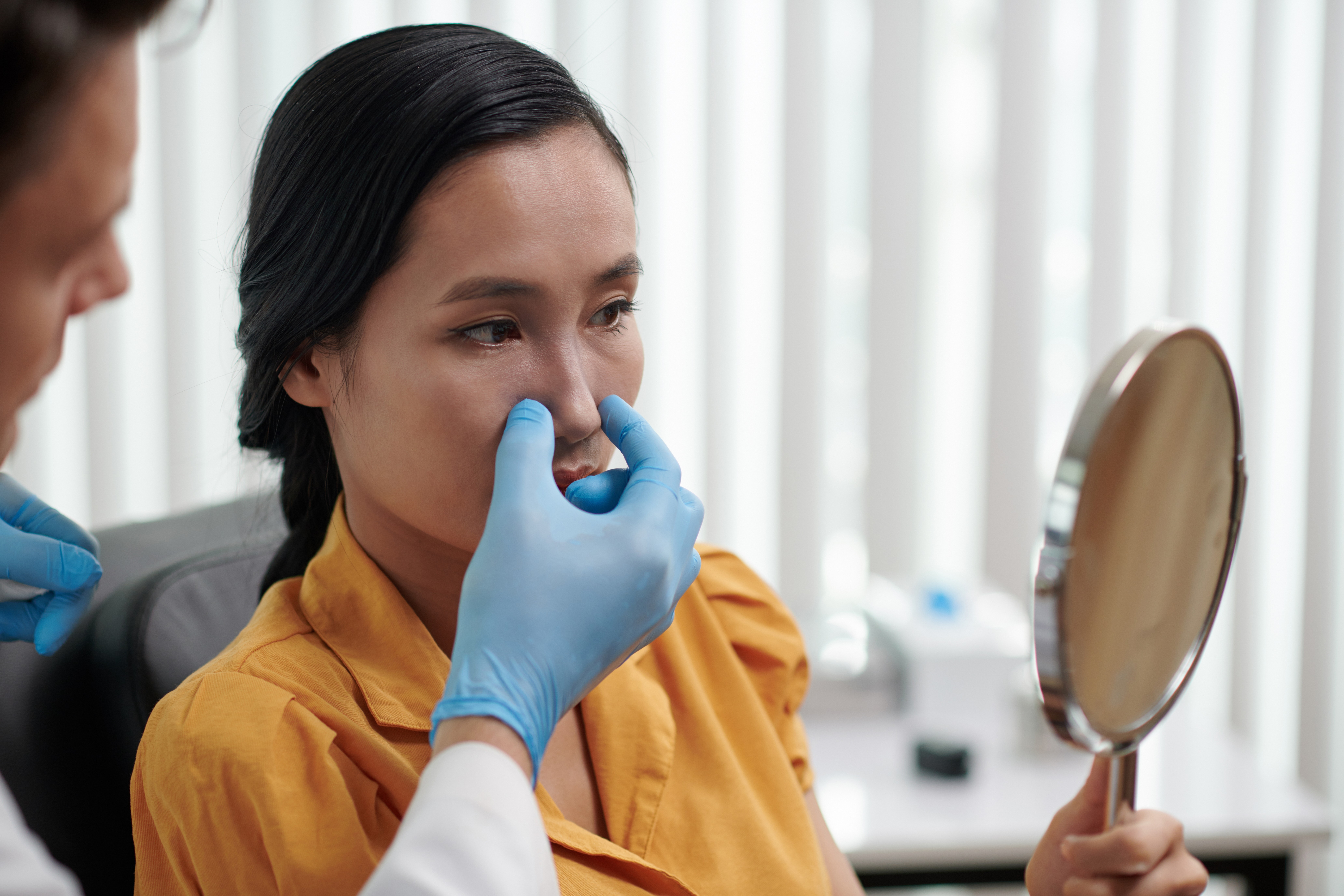
The nasal surgeons at our partner clinic in Istanbul have focused on the correction of ethnic nose shapes. Similar to other forms of rhinoplasty, the ethnic variant is also realized by removing or reshaping cartilage and bone beneath the skin. Especially in Asian noses, which often lack the cartilage important for appearance, cartilage grafts often need to be added to alter the structure of the nose and optimize the appearance in line with the patient's wishes.
Challenges of Ethnic Rhinoplasty
Turkey is located at the center of Asian, African, Arabian, and European ethnicities and offers well-functioning, large airports near the city for international patients. In this regard, the use of complete surgical techniques for these nasal shapes is part of the standard procedures in Turkey.
A rhinoplasty requires a highly individual approach depending on ethnicity. Our partner clinic in Turkey has a staff of surgeons who have developed a special sensitivity for the different aesthetic preferences of people with African American, Middle Eastern, Asian, and other non-Caucasian backgrounds. Our partner surgeons specialize in achieving results in nose job surgery that correspond optimally with the facial features of individual patients.
The nasal surgeons at our partner clinic in Istanbul have focused on the correction of ethnic nose shapes. Similar to other forms of rhinoplasty, the ethnic variant is also realized by removing or reshaping cartilage and bone beneath the skin. Especially in Asian noses, which often lack the cartilage important for appearance, cartilage grafts often need to be added to alter the structure of the nose and optimize the appearance in line with the patient's wishes.
Challenges of Ethnic Rhinoplasty
Turkey is located at the center of Asian, African, Arabian, and European ethnicities and offers well-functioning, large airports near the city for international patients. In this regard, the use of complete surgical techniques for these nasal shapes is part of the standard procedures in Turkey.
A rhinoplasty requires a highly individual approach depending on ethnicity. Our partner clinic in Turkey has a staff of surgeons who have developed a special sensitivity for the different aesthetic preferences of people with African American, Middle Eastern, Asian, and other non-Caucasian backgrounds. Our partner surgeons specialize in achieving results in nose job surgery that correspond optimally with the facial features of individual patients.
The nasal surgeons at our partner clinic in Istanbul have focused on the correction of ethnic nose shapes. Similar to other forms of rhinoplasty, the ethnic variant is also realized by removing or reshaping cartilage and bone beneath the skin. Especially in Asian noses, which often lack the cartilage important for appearance, cartilage grafts often need to be added to alter the structure of the nose and optimize the appearance in line with the patient's wishes.
| Costs
The Costs for an Ethnic Rhinoplasty
| Costs
The Costs for an Ethnic Rhinoplasty
| Costs
The Costs for an Ethnic Rhinoplasty
Detailed preliminary examinations guarantee maximum planning certainty, and thanks to no advance payment, you retain full decision-making freedom at all times.
Open Rhinoplasty
All inclusive package
3,699€
3,549€
" width="20px"><g fill="transparent" height="15.556786387423394px" id="pnjv_5etp" transform="translate(0 0)" width="20px"><path d="M 14.555 4.136 C 14.373 3.904 14.095 3.807 13.806 3.865 L 9.603 4.719 C 9.3 4.766 9.071 4.933 8.92 5.191 L 8.081 6.626 C 6.53 6.775 5.005 6.613 3.464 6.274 L 4.327 5.432 C 4.656 5.11 4.683 4.604 4.314 4.309 C 4.146 4.196 3.944 4.163 3.736 4.204 L 1.67 4.614 C 1.459 4.666 1.284 4.775 1.158 4.948 L 0.731 5.531 C 0.484 5.381 0.367 5.117 0.4 4.853 C 0.434 4.589 0.619 4.372 0.892 4.298 L 1.496 4.133 L 0.029 0.694 C -0.053 0.502 0.045 0.224 0.252 0.185 L 1.143 0.018 C 1.481 -0.045 1.792 0.06 2.034 0.301 L 3.633 1.894 L 4.185 2.446 C 4.639 2.9 5.186 3.274 5.865 3.122 L 14.698 1.144 C 15.304 1.009 15.906 0.945 16.517 0.985 C 17.466 1.047 18.141 1.424 18.825 2.049 C 19.104 2.138 19.361 2.243 19.604 2.397 C 19.947 2.615 20.089 3.015 19.942 3.4 C 19.726 3.966 18.994 4.414 18.436 4.68 C 17.797 4.984 17.142 5.179 16.449 5.329 L 13.969 5.824 L 14.501 5.167 C 14.766 4.885 14.803 4.454 14.555 4.136 Z M 16.711 2.681 L 18.334 2.242 C 18.052 1.975 17.761 1.79 17.426 1.655 L 16.505 1.879 C 16.361 1.921 16.26 2.052 16.296 2.205 L 16.369 2.518 C 16.4 2.649 16.568 2.72 16.711 2.681 Z" fill="rgb(0, 0, 0)" height="6.681673182348362px" id="surUB6rVE" transform="translate(0 3.037)" width="20px"/><path d="M 7.437 4.711 C 6.911 4.8 5.881 4.703 5.386 4.417 L 3.117 7.09 C 2.719 7.558 2.244 7.912 1.624 8.01 L 0.457 8.195 C 0.296 8.22 0.139 8.115 0.069 8.002 C -0.014 7.87 -0.027 7.705 0.057 7.562 L 0.863 6.191 L 2.091 5.992 C 2.295 5.946 2.451 5.842 2.553 5.653 L 5.62 0.585 L 8.483 0.003 C 8.592 -0.019 8.705 0.091 8.733 0.16 C 8.77 0.248 8.78 0.394 8.705 0.483 L 6.994 2.511 L 8.255 2.304 C 8.446 2.272 8.616 2.319 8.768 2.44 C 9.167 2.799 9.288 3.456 9.155 3.973 C 9.098 4.194 8.947 4.457 8.708 4.497 L 7.437 4.711 Z M 8.611 2.902 C 8.57 2.823 8.477 2.729 8.391 2.733 C 8.301 2.738 8.236 2.847 8.213 2.932 C 8.059 3.518 8.372 4.144 8.59 4.086 C 8.812 4.027 8.859 3.374 8.611 2.902 Z" fill="rgb(0, 0, 0)" height="8.198754160860972px" id="Gko0Q2xAD" transform="translate(5.48 7.358)" width="9.206777135944321px"/><path d="M 2.397 1.932 C 2.233 1.746 2.033 1.687 1.808 1.723 L 0.857 1.871 L 0.073 0.781 C -0.016 0.658 -0.022 0.505 0.047 0.361 C 0.095 0.264 0.216 0.157 0.359 0.139 L 1.317 0.016 C 1.829 -0.049 2.323 0.08 2.725 0.41 L 7.404 4.113 L 4.626 4.736 L 2.397 1.932 Z" fill="rgb(0, 0, 0)" height="4.736024779709881px" id="e6FQS5d1B" transform="translate(5.283 0)" width="7.404293140334801px"/><path d="M 0.311 2.962 C 0.197 2.98 0.088 2.935 0.039 2.853 C -0.003 2.784 -0.022 2.655 0.039 2.572 L 1.476 0.611 C 1.546 0.515 1.63 0.44 1.749 0.416 L 3.839 0.003 C 3.921 -0.013 4.013 0.04 4.052 0.098 C 4.093 0.16 4.096 0.283 4.028 0.35 L 1.974 2.381 C 1.749 2.604 1.504 2.776 1.185 2.826 L 0.312 2.962 Z" fill="rgb(0, 0, 0)" height="2.965885745576543px" id="gxetiyNaW" transform="translate(0.032 7.701)" width="4.081051628354985px"/><path d="M 0 4.931 L 2.683 0.373 C 2.75 0.26 2.847 0.195 2.964 0.159 L 3.793 0 L 0.909 4.78 L 0 4.931 Z" fill="rgb(0, 0, 0)" height="4.931364674086922px" id="C9U4Y6U51" transform="translate(6.662 8.08)" width="3.7925605384416485px"/><path d="M 2.918 2.661 L 2.005 2.883 L 0 0.122 L 0.81 0 Z" fill="rgb(0, 0, 0)" height="2.8826938918807627px" id="gH30eKQyd" transform="translate(6.46 2.182)" width="2.9176100564172884px"/><path d="M 0.422 1.027 C 0.279 1.066 0.111 0.995 0.08 0.864 L 0.007 0.55 C -0.028 0.398 0.072 0.266 0.216 0.224 L 1.138 0 C 1.472 0.136 1.763 0.321 2.046 0.587 L 0.422 1.027 Z" fill="rgb(255, 255, 255)" height="1.037353365821616px" id="MhIJTBILw" transform="translate(16.289 4.691)" width="2.0455121863528802px"/><path d="M 0.439 0.169 C 0.687 0.641 0.64 1.294 0.418 1.353 C 0.2 1.411 -0.113 0.785 0.041 0.199 C 0.064 0.114 0.129 0.005 0.219 0 C 0.309 -0.004 0.398 0.09 0.439 0.169 Z" fill="rgb(255, 255, 255)" height="1.357067903836878px" id="y_Whls7lh" transform="translate(13.652 10.091)" width="1px"/></g></g></svg>)
-150€ flight discount
Flexible financing
from
296€
/ month
*Individual terms
Details upon request
6 nights in Istanbul
VIP round-the-clock transfer
TÜV-certified service and JCI-accredited clinic
Medical follow-up
No prepayment required
Accompanying person free of charge (only flight costs)
Pre-and post-examination
German-speaking assistants
Flexible financing
Labor costs, medicines, and equipment
What is included?
Detailed preliminary examinations guarantee maximum planning certainty, and thanks to no advance payment, you retain full decision-making freedom at all times.
Open Rhinoplasty
All inclusive package
3,699€
3,549€
-150€ flight discount
Flexible financing
from
296€
/ month
*Individual terms
Details upon request
6 nights in Istanbul
VIP round-the-clock transfer
TÜV-certified service and JCI-accredited clinic
Medical follow-up
No prepayment required
Accompanying person free of charge (only flight costs)
Pre-and post-examination
German-speaking assistants
Flexible financing
Labor costs, medicines, and equipment
What is included?
Detailed preliminary examinations guarantee maximum planning certainty, and thanks to no advance payment, you retain full decision-making freedom at all times.
Open Rhinoplasty
All inclusive package
3,699€
3,549€
-150€ flight discount
Flexible financing
from
296€
/ month
*Individual terms
Details upon request
6 nights in Istanbul
VIP round-the-clock transfer
TÜV-certified service and JCI-accredited clinic
Medical follow-up
No prepayment required
Accompanying person free of charge (only flight costs)
Pre-and post-examination
German-speaking assistants
Flexible financing
Labor costs, medicines, and equipment
What is included?
| Before and After the Operation
Nose Surgery Before and After the Operation
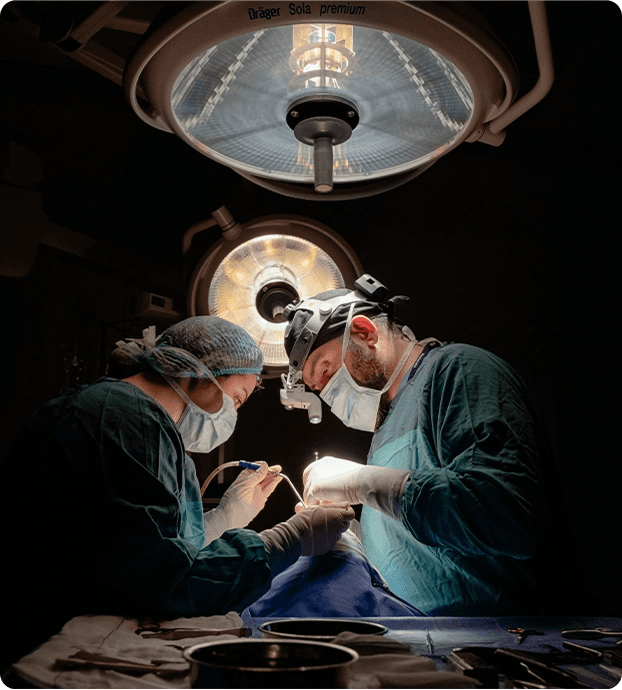
The internal medicine department subjects you to a comprehensive pre-operative examination with blood collection, ECG examination and analysis of your health status. The procedure itself is performed under general anesthesia and lasts three to four hours. It requires an inpatient stay for one night.
After the surgery, the corrected nose is supported by a light cast. This protective function is then taken over by special bandages. The tampons used will be removed during your stay for the nose surgery in Istanbul. The scars should not be exposed to sunlight or tanning bed radiation for two to three months afterward. Starting from the second week, you can resume normal activities, but you should not engage in physically strenuous activities.
| Before and After the Operation
Nose Surgery Before and After the Operation
The internal medicine department subjects you to a comprehensive pre-operative examination with blood collection, ECG examination and analysis of your health status. The procedure itself is performed under general anesthesia and lasts three to four hours. It requires an inpatient stay for one night.
After the surgery, the corrected nose is supported by a light cast. This protective function is then taken over by special bandages. The tampons used will be removed during your stay for the nose surgery in Istanbul. The scars should not be exposed to sunlight or tanning bed radiation for two to three months afterward. Starting from the second week, you can resume normal activities, but you should not engage in physically strenuous activities.
| Before and After the Operation
Nose Surgery Before and After the Operation
The internal medicine department subjects you to a comprehensive pre-operative examination with blood collection, ECG examination and analysis of your health status. The procedure itself is performed under general anesthesia and lasts three to four hours. It requires an inpatient stay for one night.
After the surgery, the corrected nose is supported by a light cast. This protective function is then taken over by special bandages. The tampons used will be removed during your stay for the nose surgery in Istanbul. The scars should not be exposed to sunlight or tanning bed radiation for two to three months afterward. Starting from the second week, you can resume normal activities, but you should not engage in physically strenuous activities.
| Healing phase
Ethnic Rhinoplasty
Operation duration
5-6 hours
Anesthesia
Full
Stay in Istanbul
7 days
Socially acceptable
7-8 days
| Healing phase
Ethnic Rhinoplasty
Operation duration
5-6 hours
Anesthesia
Full
Stay in Istanbul
7 days
Socially acceptable
7-8 days
| Healing phase
Ethnic Rhinoplasty
Operation duration
5-6 hours
Anesthesia
Full
Stay in Istanbul
7 days
Socially acceptable
7-8 days
| Contact us Today
Plan your online meeting with us
Book a consultation appointment and get closer to your journey towards a breathtaking transformation.

| Contact us Today
Plan your online meeting with us
Book a consultation appointment and get closer to your journey towards a breathtaking transformation.
| Contact us Today
Plan your online meeting with us
Book a consultation appointment and get closer to your journey towards a breathtaking transformation.
| FAQ
Frequently Asked Questions
Do you have any questions?
Can't find the right answer? Just write us a message on WhatsApp and we will get back to you as soon as possible!
Ask via WhatsApp
What are the chances of success?
Usually, the outlook is considered positive. However, a responsible surgeon will not guarantee any surgical procedure.
Which sports activities should be avoided?
Sports activities, especially ball and contact sports, should be avoided in the first 4-6 weeks after a rhinoplasty.
What should one refrain from after the surgery?
Direct contact with the sun should be avoided in the first twelve weeks after a nose surgery. It can lead to increased scarring and pigment disorders. The scars become more visible and are irreversible. Additionally, UV radiation delays the process of swelling reduction of the nose.
May I wear glasses?
Wearing glasses should be avoided for as long as possible after surgery, as the bridge of the glasses usually rests and presses exactly where the nasal bone was cut. Glasses should be avoided for at least four to six weeks.
| FAQ
Frequently Asked Questions
What are the chances of success?
Usually, the outlook is considered positive. However, a responsible surgeon will not guarantee any surgical procedure.
Which sports activities should be avoided?
Sports activities, especially ball and contact sports, should be avoided in the first 4-6 weeks after a rhinoplasty.
What should one refrain from after the surgery?
Direct contact with the sun should be avoided in the first twelve weeks after a nose surgery. It can lead to increased scarring and pigment disorders. The scars become more visible and are irreversible. Additionally, UV radiation delays the process of swelling reduction of the nose.
May I wear glasses?
Wearing glasses should be avoided for as long as possible after surgery, as the bridge of the glasses usually rests and presses exactly where the nasal bone was cut. Glasses should be avoided for at least four to six weeks.
Do you have any questions?
Can't find the right answer? Just write us a message on WhatsApp and we will get back to you as soon as possible!
Ask via WhatsApp
| FAQ
Frequently Asked Questions
What are the chances of success?
Usually, the outlook is considered positive. However, a responsible surgeon will not guarantee any surgical procedure.
Which sports activities should be avoided?
Sports activities, especially ball and contact sports, should be avoided in the first 4-6 weeks after a rhinoplasty.
What should one refrain from after the surgery?
Direct contact with the sun should be avoided in the first twelve weeks after a nose surgery. It can lead to increased scarring and pigment disorders. The scars become more visible and are irreversible. Additionally, UV radiation delays the process of swelling reduction of the nose.
May I wear glasses?
Wearing glasses should be avoided for as long as possible after surgery, as the bridge of the glasses usually rests and presses exactly where the nasal bone was cut. Glasses should be avoided for at least four to six weeks.
Do you have any questions?
Can't find the right answer? Just write us a message on WhatsApp and we will get back to you as soon as possible!
Ask via WhatsApp
Request now

Your Beauty and Health Agency
since 2006
The treatments are carried out in contractually bound health facilities approved for international health tourism.
Opening hours
Office - London 128 City Road, EC1V 2NX
Monday to Friday: 9:00 AM – 6:00 PM Saturday: 10:00 AM – 2:00 PM

Consulting center since 2008.
TÜV certified since 2012
Certificate for International Health Tourism
Your Beauty and Medical Agency since 2006
The treatments are carried out in contractually bound health facilities approved for international health tourism.
Opening hours
Office - London 128 City Road, EC1V 2NX
Monday to Friday: 9:00 AM – 6:00 PM Saturday: 10:00 AM – 2:00 PM
Consulting center since 2008.
TÜV certified since 2012
Certificate for International Health Tourism
Copyright © Beauty Travels 24 2006-2026
Your Beauty and Medical Agency since 2006
The treatments are carried out in contractually bound health facilities approved for international health tourism.
Opening hours
Office - London 128 City Road, EC1V 2NX
Monday to Friday: 9:00 AM – 6:00 PM Saturday: 10:00 AM – 2:00 PM
Consulting center since 2008.
TÜV certified since 2012
Certificate for International Health Tourism