

Breast Implant Replacement
Breast implant replacement in Turkey
A breast implant exchange may be necessary for medical or aesthetic reasons. It is medically necessary, for example, in the case of capsular contracture, an implant rupture, or when older implants have reached the end of their durability. Modern implants from leading manufacturers like Motiva, Mentor, or Polytech are significantly more durable and safer today, but older generations should be checked and possibly replaced after 10-15 years.
Aesthetic desires can also be a reason: Over the years, the breast changes due to pregnancy, weight loss, or the natural aging process. Some patients then wish for a different volume, a new shape, or modern implant technology such as the particularly lightweight B-Lite implants or the naturally appearing Ergonomix models.
An implant exchange offers not only the chance for greater safety but also the opportunity to benefit from the latest technologies. Thus, the breast can be reshaped harmoniously after many years and adapted to the current desires of the patient.
Breast Implant Replacement
Breast implant replacement in Turkey
A breast implant exchange may be necessary for medical or aesthetic reasons. It is medically necessary, for example, in the case of capsular contracture, an implant rupture, or when older implants have reached the end of their durability. Modern implants from leading manufacturers like Motiva, Mentor, or Polytech are significantly more durable and safer today, but older generations should be checked and possibly replaced after 10-15 years.
Aesthetic desires can also be a reason: Over the years, the breast changes due to pregnancy, weight loss, or the natural aging process. Some patients then wish for a different volume, a new shape, or modern implant technology such as the particularly lightweight B-Lite implants or the naturally appearing Ergonomix models.
An implant exchange offers not only the chance for greater safety but also the opportunity to benefit from the latest technologies. Thus, the breast can be reshaped harmoniously after many years and adapted to the current desires of the patient.
Breast Implant Replacement
Breast implant replacement in Turkey
A breast implant exchange may be necessary for medical or aesthetic reasons. It is medically necessary, for example, in the case of capsular contracture, an implant rupture, or when older implants have reached the end of their durability. Modern implants from leading manufacturers like Motiva, Mentor, or Polytech are significantly more durable and safer today, but older generations should be checked and possibly replaced after 10-15 years.
Aesthetic desires can also be a reason: Over the years, the breast changes due to pregnancy, weight loss, or the natural aging process. Some patients then wish for a different volume, a new shape, or modern implant technology such as the particularly lightweight B-Lite implants or the naturally appearing Ergonomix models.
An implant exchange offers not only the chance for greater safety but also the opportunity to benefit from the latest technologies. Thus, the breast can be reshaped harmoniously after many years and adapted to the current desires of the patient.
Your Advantages
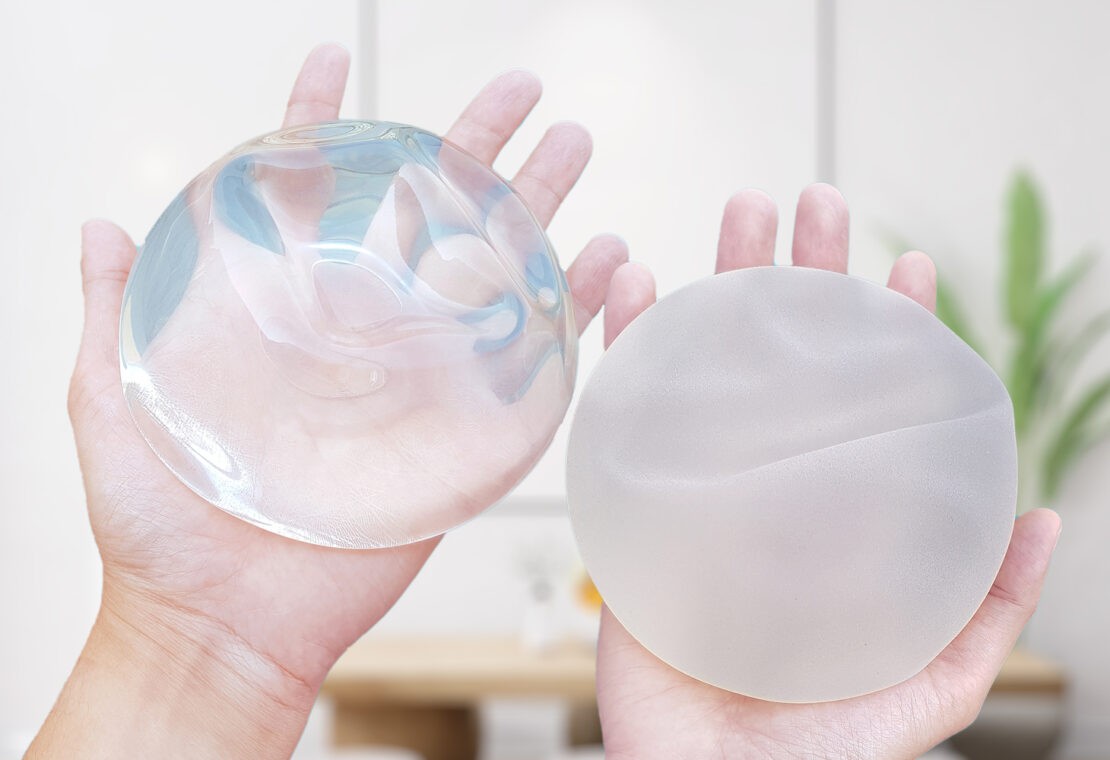
The use of certified quality implants from leading brands (Motiva, Mentor, Polytech) exclusively
Partner surgeons with many years of experience and specialization in breast surgeries
TÜV-certified processes for maximum safety and transparency
Organization of clinic, accommodation, transfers, and German-speaking support in Istanbul
No advance payment – payment takes place directly on site at the clinic
An implant exchange not only offers the opportunity for more safety but also the chance to benefit from the latest technologies. This allows the breast to be reshaped harmoniously after many years and adjusted to the current wishes of the patient.
Your Advantages
The use of certified quality implants from leading brands (Motiva, Mentor, Polytech) exclusively
Partner surgeons with many years of experience and specialization in breast surgeries
TÜV-certified processes for maximum safety and transparency
Organization of clinic, accommodation, transfers, and German-speaking support in Istanbul
No advance payment – payment takes place directly on site at the clinic
An implant exchange not only offers the opportunity for more safety but also the chance to benefit from the latest technologies. This allows the breast to be reshaped harmoniously after many years and adjusted to the current wishes of the patient.
Your Advantages
The use of certified quality implants from leading brands (Motiva, Mentor, Polytech) exclusively
Partner surgeons with many years of experience and specialization in breast surgeries
TÜV-certified processes for maximum safety and transparency
Organization of clinic, accommodation, transfers, and German-speaking support in Istanbul
No advance payment – payment takes place directly on site at the clinic
An implant exchange not only offers the opportunity for more safety but also the chance to benefit from the latest technologies. This allows the breast to be reshaped harmoniously after many years and adjusted to the current wishes of the patient.
| Costs
The Costs for Breast Implant Replacement
| Costs
The Costs for Breast Implant Replacement
| Costs
The Costs for Breast Implant Replacement
Cost overview for your breast implant replacement
Breast Implant Replacement
All inclusive package
4,949€
4,799€
" width="20px"><g fill="transparent" height="15.556786387423394px" id="pnjv_5etp" transform="translate(0 0)" width="20px"><path d="M 14.555 4.136 C 14.373 3.904 14.095 3.807 13.806 3.865 L 9.603 4.719 C 9.3 4.766 9.071 4.933 8.92 5.191 L 8.081 6.626 C 6.53 6.775 5.005 6.613 3.464 6.274 L 4.327 5.432 C 4.656 5.11 4.683 4.604 4.314 4.309 C 4.146 4.196 3.944 4.163 3.736 4.204 L 1.67 4.614 C 1.459 4.666 1.284 4.775 1.158 4.948 L 0.731 5.531 C 0.484 5.381 0.367 5.117 0.4 4.853 C 0.434 4.589 0.619 4.372 0.892 4.298 L 1.496 4.133 L 0.029 0.694 C -0.053 0.502 0.045 0.224 0.252 0.185 L 1.143 0.018 C 1.481 -0.045 1.792 0.06 2.034 0.301 L 3.633 1.894 L 4.185 2.446 C 4.639 2.9 5.186 3.274 5.865 3.122 L 14.698 1.144 C 15.304 1.009 15.906 0.945 16.517 0.985 C 17.466 1.047 18.141 1.424 18.825 2.049 C 19.104 2.138 19.361 2.243 19.604 2.397 C 19.947 2.615 20.089 3.015 19.942 3.4 C 19.726 3.966 18.994 4.414 18.436 4.68 C 17.797 4.984 17.142 5.179 16.449 5.329 L 13.969 5.824 L 14.501 5.167 C 14.766 4.885 14.803 4.454 14.555 4.136 Z M 16.711 2.681 L 18.334 2.242 C 18.052 1.975 17.761 1.79 17.426 1.655 L 16.505 1.879 C 16.361 1.921 16.26 2.052 16.296 2.205 L 16.369 2.518 C 16.4 2.649 16.568 2.72 16.711 2.681 Z" fill="rgb(0, 0, 0)" height="6.681673182348362px" id="surUB6rVE" transform="translate(0 3.037)" width="20px"/><path d="M 7.437 4.711 C 6.911 4.8 5.881 4.703 5.386 4.417 L 3.117 7.09 C 2.719 7.558 2.244 7.912 1.624 8.01 L 0.457 8.195 C 0.296 8.22 0.139 8.115 0.069 8.002 C -0.014 7.87 -0.027 7.705 0.057 7.562 L 0.863 6.191 L 2.091 5.992 C 2.295 5.946 2.451 5.842 2.553 5.653 L 5.62 0.585 L 8.483 0.003 C 8.592 -0.019 8.705 0.091 8.733 0.16 C 8.77 0.248 8.78 0.394 8.705 0.483 L 6.994 2.511 L 8.255 2.304 C 8.446 2.272 8.616 2.319 8.768 2.44 C 9.167 2.799 9.288 3.456 9.155 3.973 C 9.098 4.194 8.947 4.457 8.708 4.497 L 7.437 4.711 Z M 8.611 2.902 C 8.57 2.823 8.477 2.729 8.391 2.733 C 8.301 2.738 8.236 2.847 8.213 2.932 C 8.059 3.518 8.372 4.144 8.59 4.086 C 8.812 4.027 8.859 3.374 8.611 2.902 Z" fill="rgb(0, 0, 0)" height="8.198754160860972px" id="Gko0Q2xAD" transform="translate(5.48 7.358)" width="9.206777135944321px"/><path d="M 2.397 1.932 C 2.233 1.746 2.033 1.687 1.808 1.723 L 0.857 1.871 L 0.073 0.781 C -0.016 0.658 -0.022 0.505 0.047 0.361 C 0.095 0.264 0.216 0.157 0.359 0.139 L 1.317 0.016 C 1.829 -0.049 2.323 0.08 2.725 0.41 L 7.404 4.113 L 4.626 4.736 L 2.397 1.932 Z" fill="rgb(0, 0, 0)" height="4.736024779709881px" id="e6FQS5d1B" transform="translate(5.283 0)" width="7.404293140334801px"/><path d="M 0.311 2.962 C 0.197 2.98 0.088 2.935 0.039 2.853 C -0.003 2.784 -0.022 2.655 0.039 2.572 L 1.476 0.611 C 1.546 0.515 1.63 0.44 1.749 0.416 L 3.839 0.003 C 3.921 -0.013 4.013 0.04 4.052 0.098 C 4.093 0.16 4.096 0.283 4.028 0.35 L 1.974 2.381 C 1.749 2.604 1.504 2.776 1.185 2.826 L 0.312 2.962 Z" fill="rgb(0, 0, 0)" height="2.965885745576543px" id="gxetiyNaW" transform="translate(0.032 7.701)" width="4.081051628354985px"/><path d="M 0 4.931 L 2.683 0.373 C 2.75 0.26 2.847 0.195 2.964 0.159 L 3.793 0 L 0.909 4.78 L 0 4.931 Z" fill="rgb(0, 0, 0)" height="4.931364674086922px" id="C9U4Y6U51" transform="translate(6.662 8.08)" width="3.7925605384416485px"/><path d="M 2.918 2.661 L 2.005 2.883 L 0 0.122 L 0.81 0 Z" fill="rgb(0, 0, 0)" height="2.8826938918807627px" id="gH30eKQyd" transform="translate(6.46 2.182)" width="2.9176100564172884px"/><path d="M 0.422 1.027 C 0.279 1.066 0.111 0.995 0.08 0.864 L 0.007 0.55 C -0.028 0.398 0.072 0.266 0.216 0.224 L 1.138 0 C 1.472 0.136 1.763 0.321 2.046 0.587 L 0.422 1.027 Z" fill="rgb(255, 255, 255)" height="1.037353365821616px" id="MhIJTBILw" transform="translate(16.289 4.691)" width="2.0455121863528802px"/><path d="M 0.439 0.169 C 0.687 0.641 0.64 1.294 0.418 1.353 C 0.2 1.411 -0.113 0.785 0.041 0.199 C 0.064 0.114 0.129 0.005 0.219 0 C 0.309 -0.004 0.398 0.09 0.439 0.169 Z" fill="rgb(255, 255, 255)" height="1.357067903836878px" id="y_Whls7lh" transform="translate(13.652 10.091)" width="1px"/></g></g></svg>)
-150€ flight discount
Flexible financing
from
400€
/ month
*Individual terms
Details upon request
5 nights in Istanbul
No prepayment required
Park & Fly – Stress-free parking and flying!
Aftercare possible in Germany
Flight costs up to €100
Installment payment possible
VIP round-the-clock transfer
English-speaking assistants in the clinic
Accompanying Person Free of Charge
12 months of follow-up care
What is included?
Cost overview for your breast implant replacement
Breast Implant Replacement
All inclusive package
4,949€
4,799€
-150€ flight discount
Flexible financing
from
400€
/ month
*Individual terms
Details upon request
5 nights in Istanbul
No prepayment required
Park & Fly – Stress-free parking and flying!
Aftercare possible in Germany
Flight costs up to €100
Installment payment possible
VIP round-the-clock transfer
English-speaking assistants in the clinic
Accompanying Person Free of Charge
12 months of follow-up care
What is included?
Cost overview for your breast implant replacement
Breast Implant Replacement
All inclusive package
4,949€
4,799€
-150€ flight discount
Flexible financing
from
400€
/ month
*Individual terms
Details upon request
5 nights in Istanbul
No prepayment required
Park & Fly – Stress-free parking and flying!
Aftercare possible in Germany
Flight costs up to €100
Installment payment possible
VIP round-the-clock transfer
English-speaking assistants in the clinic
Accompanying Person Free of Charge
12 months of follow-up care
What is included?
| Contact us Today
Plan your online meeting with us
Book a consultation appointment and get closer to your journey towards a breathtaking transformation.

| Contact us Today
Plan your online meeting with us
Book a consultation appointment and get closer to your journey towards a breathtaking transformation.
| Contact us Today
Plan your online meeting with us
Book a consultation appointment and get closer to your journey towards a breathtaking transformation.
| FAQ
Frequently Asked Questions
Do you have any questions?
Can't find the right answer? Just write us a message on WhatsApp and we will get back to you as soon as possible!
Ask via WhatsApp
What is a capsule fibrosis and how is it diagnosed?
Capsule fibrosis represents a rare complication in breast enlargements using implants. It is a foreign reaction of the body that tries to reject the implant. After the implants are placed during the enlargement procedure, the body forms a thin inner capsule around the implants. This capsule keeps the implants in the correct position and prevents unwanted shifting of the silicone implants. Over time, the capsule can thicken and harden, leading to what is known as capsule fibrosis. If left untreated, the capsule shrinks, resulting in a visible deformation of the implant and hardening of the breast. The typical symptoms of capsule fibrosis include pain and a feeling of tension in the breast area. There may be visual changes or deformations due to the shifting or rotating of the implant. Asymmetries or folds with hardening of the breast tissue accompany these phenomena.
How can one prevent cystic fibrosis?
To prevent capsule fibrosis, a modern and high-quality implant should definitely be used. This procedure must be carried out with the utmost hygiene and safety measures, as well as the correct surgical technique, so that the result looks beautiful and natural for many years. The surgeon's instructions regarding the preparation and aftercare of the surgery are important. After the removal of the implant and the capsule, the surgeon can insert a new implant. He can even change the position of the implant at the request of the patient. A new appointment does not need to be scheduled for the implant replacement. The surgeon can immediately insert the new implant after removing the old one and treating the capsule fibrosis.
How long do breast implants last?
It is often stated that breast implants last about ten years before they need to be replaced. This information generally refers to breast implants of older generations, whose implant shells and surfaces were more prone to wear and damage compared to today's breast implants. In contrast, breast implants of newer generations are characterized by being made from modern and high-quality materials, which lead to longer-lasting or even lifetime durability. After breast augmentation, regular check-ups take place to assess the condition of the implant. This makes it possible to detect any damage or risks early and take appropriate measures. For a large majority of women, breast implants are still in excellent and safe condition even after ten years.
What are the reasons for an implant removal?
The removal or replacement of implants is not advised for the latest breast implants after a certain period but only in case of health or aesthetic issues. If women suffer from pain or discomfort due to the implant or if a severe capsular contracture has developed, it may be necessary to replace or remove the implants. Aesthetic reasons may also lead women to decide to have their breast implants removed or to choose a different implant size.
Can you breastfeed with breast implants?
For most women, breastfeeding is possible without restrictions even after breast augmentation with implants. The implants do not affect the development of the baby or the breast milk. A capsular contracture is also not more likely due to pregnancy and breastfeeding after breast surgery. In rare cases, there may be a loss of sensitivity. Numbness can make breastfeeding slightly more challenging for mothers than it would be without prior breast surgery. Breast augmentation creates scars in the breast that can lead to discomfort or slight pain while breastfeeding.
What is the difference between old and new implants?
When choosing the right breast implants, size, shape, surface, and consistency are taken into account. A large part of the implants used today consists of an elastic silicone shell filled with silicone gel. In the past, implants filled with saline solution were used. During the US silicone moratorium – the legal ban on silicone implants from 1992 to 2006 – saline implants were produced as an alternative. After several scientific core studies on silicone implants were conducted, the US government allowed the use of these implants again. Subsequently, the number of breast augmentations with saline implants decreased significantly. All silicone implants are made from medical-grade silicone, which has a defined level of purity. This medical silicone is produced by only one manufacturer in the USA. All implant manufacturers use this base silicone in their products and develop implants according to their own specifications.
| FAQ
Frequently Asked Questions
What is a capsule fibrosis and how is it diagnosed?
Capsule fibrosis represents a rare complication in breast enlargements using implants. It is a foreign reaction of the body that tries to reject the implant. After the implants are placed during the enlargement procedure, the body forms a thin inner capsule around the implants. This capsule keeps the implants in the correct position and prevents unwanted shifting of the silicone implants. Over time, the capsule can thicken and harden, leading to what is known as capsule fibrosis. If left untreated, the capsule shrinks, resulting in a visible deformation of the implant and hardening of the breast. The typical symptoms of capsule fibrosis include pain and a feeling of tension in the breast area. There may be visual changes or deformations due to the shifting or rotating of the implant. Asymmetries or folds with hardening of the breast tissue accompany these phenomena.
How can one prevent cystic fibrosis?
To prevent capsule fibrosis, a modern and high-quality implant should definitely be used. This procedure must be carried out with the utmost hygiene and safety measures, as well as the correct surgical technique, so that the result looks beautiful and natural for many years. The surgeon's instructions regarding the preparation and aftercare of the surgery are important. After the removal of the implant and the capsule, the surgeon can insert a new implant. He can even change the position of the implant at the request of the patient. A new appointment does not need to be scheduled for the implant replacement. The surgeon can immediately insert the new implant after removing the old one and treating the capsule fibrosis.
How long do breast implants last?
It is often stated that breast implants last about ten years before they need to be replaced. This information generally refers to breast implants of older generations, whose implant shells and surfaces were more prone to wear and damage compared to today's breast implants. In contrast, breast implants of newer generations are characterized by being made from modern and high-quality materials, which lead to longer-lasting or even lifetime durability. After breast augmentation, regular check-ups take place to assess the condition of the implant. This makes it possible to detect any damage or risks early and take appropriate measures. For a large majority of women, breast implants are still in excellent and safe condition even after ten years.
What are the reasons for an implant removal?
The removal or replacement of implants is not advised for the latest breast implants after a certain period but only in case of health or aesthetic issues. If women suffer from pain or discomfort due to the implant or if a severe capsular contracture has developed, it may be necessary to replace or remove the implants. Aesthetic reasons may also lead women to decide to have their breast implants removed or to choose a different implant size.
Can you breastfeed with breast implants?
For most women, breastfeeding is possible without restrictions even after breast augmentation with implants. The implants do not affect the development of the baby or the breast milk. A capsular contracture is also not more likely due to pregnancy and breastfeeding after breast surgery. In rare cases, there may be a loss of sensitivity. Numbness can make breastfeeding slightly more challenging for mothers than it would be without prior breast surgery. Breast augmentation creates scars in the breast that can lead to discomfort or slight pain while breastfeeding.
What is the difference between old and new implants?
When choosing the right breast implants, size, shape, surface, and consistency are taken into account. A large part of the implants used today consists of an elastic silicone shell filled with silicone gel. In the past, implants filled with saline solution were used. During the US silicone moratorium – the legal ban on silicone implants from 1992 to 2006 – saline implants were produced as an alternative. After several scientific core studies on silicone implants were conducted, the US government allowed the use of these implants again. Subsequently, the number of breast augmentations with saline implants decreased significantly. All silicone implants are made from medical-grade silicone, which has a defined level of purity. This medical silicone is produced by only one manufacturer in the USA. All implant manufacturers use this base silicone in their products and develop implants according to their own specifications.
Do you have any questions?
Can't find the right answer? Just write us a message on WhatsApp and we will get back to you as soon as possible!
Ask via WhatsApp
| FAQ
Frequently Asked Questions
What is a capsule fibrosis and how is it diagnosed?
Capsule fibrosis represents a rare complication in breast enlargements using implants. It is a foreign reaction of the body that tries to reject the implant. After the implants are placed during the enlargement procedure, the body forms a thin inner capsule around the implants. This capsule keeps the implants in the correct position and prevents unwanted shifting of the silicone implants. Over time, the capsule can thicken and harden, leading to what is known as capsule fibrosis. If left untreated, the capsule shrinks, resulting in a visible deformation of the implant and hardening of the breast. The typical symptoms of capsule fibrosis include pain and a feeling of tension in the breast area. There may be visual changes or deformations due to the shifting or rotating of the implant. Asymmetries or folds with hardening of the breast tissue accompany these phenomena.
How can one prevent cystic fibrosis?
To prevent capsule fibrosis, a modern and high-quality implant should definitely be used. This procedure must be carried out with the utmost hygiene and safety measures, as well as the correct surgical technique, so that the result looks beautiful and natural for many years. The surgeon's instructions regarding the preparation and aftercare of the surgery are important. After the removal of the implant and the capsule, the surgeon can insert a new implant. He can even change the position of the implant at the request of the patient. A new appointment does not need to be scheduled for the implant replacement. The surgeon can immediately insert the new implant after removing the old one and treating the capsule fibrosis.
How long do breast implants last?
It is often stated that breast implants last about ten years before they need to be replaced. This information generally refers to breast implants of older generations, whose implant shells and surfaces were more prone to wear and damage compared to today's breast implants. In contrast, breast implants of newer generations are characterized by being made from modern and high-quality materials, which lead to longer-lasting or even lifetime durability. After breast augmentation, regular check-ups take place to assess the condition of the implant. This makes it possible to detect any damage or risks early and take appropriate measures. For a large majority of women, breast implants are still in excellent and safe condition even after ten years.
What are the reasons for an implant removal?
The removal or replacement of implants is not advised for the latest breast implants after a certain period but only in case of health or aesthetic issues. If women suffer from pain or discomfort due to the implant or if a severe capsular contracture has developed, it may be necessary to replace or remove the implants. Aesthetic reasons may also lead women to decide to have their breast implants removed or to choose a different implant size.
Can you breastfeed with breast implants?
For most women, breastfeeding is possible without restrictions even after breast augmentation with implants. The implants do not affect the development of the baby or the breast milk. A capsular contracture is also not more likely due to pregnancy and breastfeeding after breast surgery. In rare cases, there may be a loss of sensitivity. Numbness can make breastfeeding slightly more challenging for mothers than it would be without prior breast surgery. Breast augmentation creates scars in the breast that can lead to discomfort or slight pain while breastfeeding.
What is the difference between old and new implants?
When choosing the right breast implants, size, shape, surface, and consistency are taken into account. A large part of the implants used today consists of an elastic silicone shell filled with silicone gel. In the past, implants filled with saline solution were used. During the US silicone moratorium – the legal ban on silicone implants from 1992 to 2006 – saline implants were produced as an alternative. After several scientific core studies on silicone implants were conducted, the US government allowed the use of these implants again. Subsequently, the number of breast augmentations with saline implants decreased significantly. All silicone implants are made from medical-grade silicone, which has a defined level of purity. This medical silicone is produced by only one manufacturer in the USA. All implant manufacturers use this base silicone in their products and develop implants according to their own specifications.
Do you have any questions?
Can't find the right answer? Just write us a message on WhatsApp and we will get back to you as soon as possible!
Ask via WhatsApp
Request now

Your Beauty and Health Agency
since 2006
The treatments are carried out in contractually bound health facilities approved for international health tourism.
Opening hours
Office - London 128 City Road, EC1V 2NX
Monday to Friday: 9:00 AM – 6:00 PM Saturday: 10:00 AM – 2:00 PM

Consulting center since 2008.
TÜV certified since 2012

Certificate for International Health Tourism

Your Beauty and Medical Agency since 2006
The treatments are carried out in contractually bound health facilities approved for international health tourism.
Opening hours
Office - London 128 City Road, EC1V 2NX
Monday to Friday: 9:00 AM – 6:00 PM Saturday: 10:00 AM – 2:00 PM
Consulting center since 2008.
TÜV certified since 2012
Certificate for International Health Tourism
Copyright © Beauty Travels 24 2006-2026
Your Beauty and Medical Agency since 2006
The treatments are carried out in contractually bound health facilities approved for international health tourism.
Opening hours
Office - London 128 City Road, EC1V 2NX
Monday to Friday: 9:00 AM – 6:00 PM Saturday: 10:00 AM – 2:00 PM
Consulting center since 2008.
TÜV certified since 2012
Certificate for International Health Tourism