
Percutaneous Technique
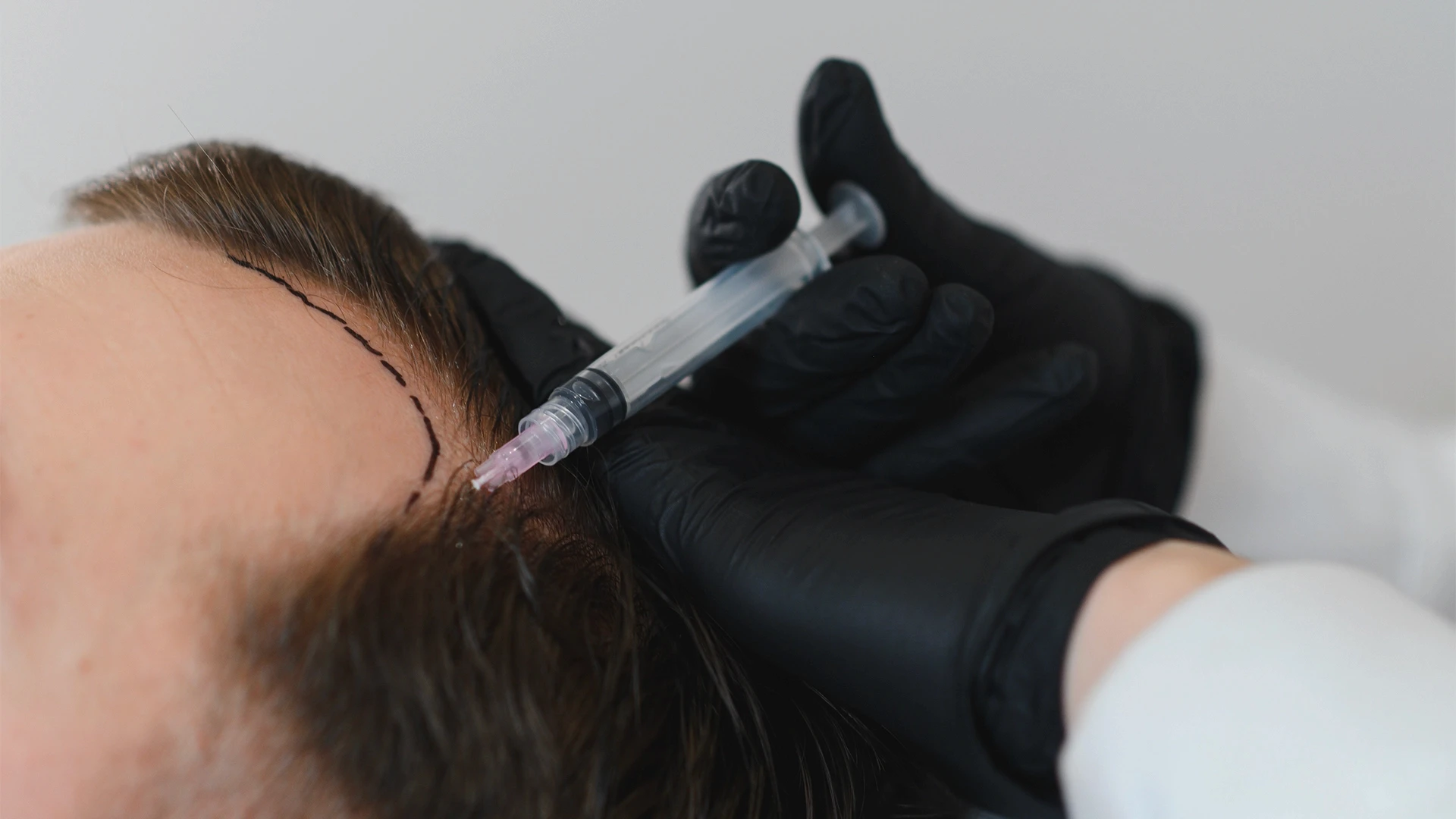
The percutaneous technique in hair transplantation is an advanced method where hair follicles are directly inserted into the scalp through tiny, precise incisions. The hair is usually harvested from the densely populated area at the back of the head, processed, and then transplanted through minimally invasive, microscopically small channels, leaving no larger cuts or scars. This method is characterized by a particularly natural alignment of the hair, allowing for an authentic result without visible traces of transplantation.
Percutaneous Technique
The percutaneous technique in hair transplantation is an advanced method where hair follicles are directly inserted into the scalp through tiny, precise incisions. The hair is usually harvested from the densely populated area at the back of the head, processed, and then transplanted through minimally invasive, microscopically small channels, leaving no larger cuts or scars. This method is characterized by a particularly natural alignment of the hair, allowing for an authentic result without visible traces of transplantation.
Percutaneous Technique
The percutaneous technique in hair transplantation is an advanced method where hair follicles are directly inserted into the scalp through tiny, precise incisions. The hair is usually harvested from the densely populated area at the back of the head, processed, and then transplanted through minimally invasive, microscopically small channels, leaving no larger cuts or scars. This method is characterized by a particularly natural alignment of the hair, allowing for an authentic result without visible traces of transplantation.
The Procedure
The percutaneous technique is a method in hair transplantation, in which hair follicles are directly inserted into the scalp without prior channel opening.
During this process, very fine needles or special implantation instruments create microscopically small openings immediately before the grafts are placed. The hair follicle is positioned in a single step. In contrast to classical methods, the previous creation of channels with a scalpel or knife is omitted.
The advantage of the percutaneous technique lies in its high precision. Growth direction, hair angle, and depth can be controlled very accurately, which is particularly important in sensitive areas such as the hairline, the temples, or the beard. Since there are no large incisions, the surrounding tissue is preserved, which can reduce the risk of scarring and inflammation.
The percutaneous technique requires a lot of experience and a precise working method from the treating physician. It is often used in combination with modern methods such as DHI or FUE and aims to achieve a result that is as natural and uniform as possible.
The Procedure
The percutaneous technique is a method in hair transplantation, in which hair follicles are directly inserted into the scalp without prior channel opening.
During this process, very fine needles or special implantation instruments create microscopically small openings immediately before the grafts are placed. The hair follicle is positioned in a single step. In contrast to classical methods, the previous creation of channels with a scalpel or knife is omitted.
The advantage of the percutaneous technique lies in its high precision. Growth direction, hair angle, and depth can be controlled very accurately, which is particularly important in sensitive areas such as the hairline, the temples, or the beard. Since there are no large incisions, the surrounding tissue is preserved, which can reduce the risk of scarring and inflammation.
The percutaneous technique requires a lot of experience and a precise working method from the treating physician. It is often used in combination with modern methods such as DHI or FUE and aims to achieve a result that is as natural and uniform as possible.
The Procedure
The percutaneous technique is a method in hair transplantation, in which hair follicles are directly inserted into the scalp without prior channel opening.
During this process, very fine needles or special implantation instruments create microscopically small openings immediately before the grafts are placed. The hair follicle is positioned in a single step. In contrast to classical methods, the previous creation of channels with a scalpel or knife is omitted.
The advantage of the percutaneous technique lies in its high precision. Growth direction, hair angle, and depth can be controlled very accurately, which is particularly important in sensitive areas such as the hairline, the temples, or the beard. Since there are no large incisions, the surrounding tissue is preserved, which can reduce the risk of scarring and inflammation.
The percutaneous technique requires a lot of experience and a precise working method from the treating physician. It is often used in combination with modern methods such as DHI or FUE and aims to achieve a result that is as natural and uniform as possible.
Advantages and Disadvantages
Advantages
Natural result through precise placement of hair follicles into tiny channels, allowing the hair to grow in a natural direction.
Minimally invasive and scar-saving, as no large incisions are necessary.
Possibility to achieve good density even with sparse hair on the scalp.
Disadvantages
The treatment is time-consuming as each hair root is transplanted individually.
Higher costs compared to older procedures due to the elaborate technique and precision.
Results are only fully visible after months, as the hair needs to grow first.
Advantages and Disadvantages
Advantages
Natural result through precise placement of hair follicles into tiny channels, allowing the hair to grow in a natural direction.
Minimally invasive and scar-saving, as no large incisions are necessary.
Possibility to achieve good density even with sparse hair on the scalp.
Disadvantages
The treatment is time-consuming as each hair root is transplanted individually.
Higher costs compared to older procedures due to the elaborate technique and precision.
Results are only fully visible after months, as the hair needs to grow first.
Advantages and Disadvantages
Advantages
Natural result through precise placement of hair follicles into tiny channels, allowing the hair to grow in a natural direction.
Minimally invasive and scar-saving, as no large incisions are necessary.
Possibility to achieve good density even with sparse hair on the scalp.
Disadvantages
The treatment is time-consuming as each hair root is transplanted individually.
Higher costs compared to older procedures due to the elaborate technique and precision.
Results are only fully visible after months, as the hair needs to grow first.
| Contact us Today
Plan your online meeting with us
Book a consultation appointment and get closer to your journey towards a breathtaking transformation.

| Contact us Today
Plan your online meeting with us
Book a consultation appointment and get closer to your journey towards a breathtaking transformation.
| Contact us Today
Plan your online meeting with us
Book a consultation appointment and get closer to your journey towards a breathtaking transformation.
Request now

Your Beauty and Health Agency
since 2006
The treatments are carried out in contractually bound health facilities approved for international health tourism.
Opening hours
Office - London 128 City Road, EC1V 2NX
Monday to Friday: 9:00 AM – 6:00 PM Saturday: 10:00 AM – 2:00 PM

Consulting center since 2008.
TÜV certified since 2012
Certificate for International Health Tourism

Your Beauty and Medical Agency since 2006
The treatments are carried out in contractually bound health facilities approved for international health tourism.
Opening hours
Office - London 128 City Road, EC1V 2NX
Monday to Friday: 9:00 AM – 6:00 PM Saturday: 10:00 AM – 2:00 PM
Consulting center since 2008.
TÜV certified since 2012
Certificate for International Health Tourism
Copyright © Beauty Travels 24 2006-2026
Your Beauty and Medical Agency since 2006
The treatments are carried out in contractually bound health facilities approved for international health tourism.
Opening hours
Office - London 128 City Road, EC1V 2NX
Monday to Friday: 9:00 AM – 6:00 PM Saturday: 10:00 AM – 2:00 PM
Consulting center since 2008.
TÜV certified since 2012
Certificate for International Health Tourism